
Arm Exercises With Dumbbells: Build Bigger Arms
Master arm exercises with dumbbells for bigger biceps and triceps. Learn proper form, programming, and variations to build strength and size.
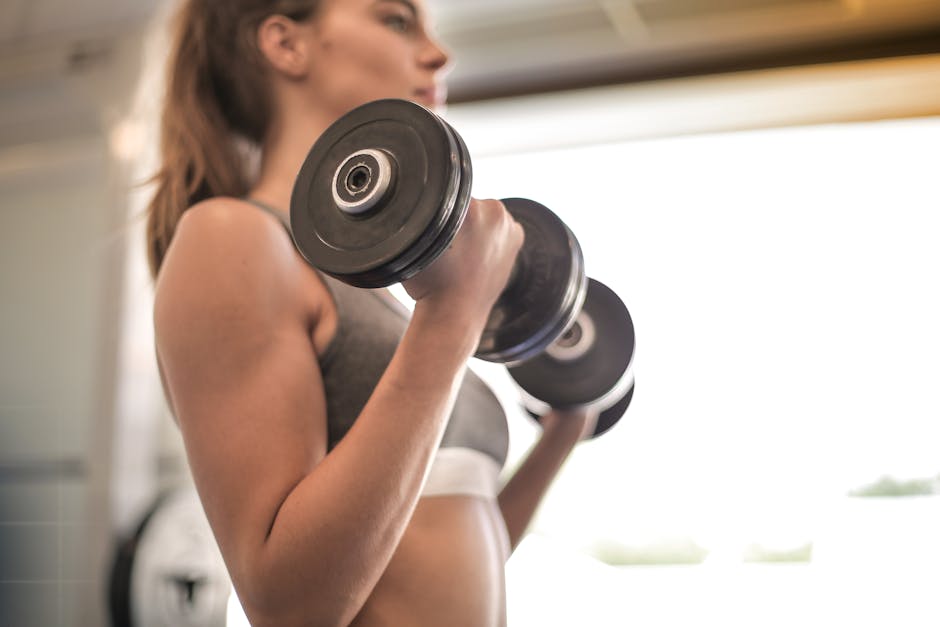
Arm exercises with dumbbells are among the most effective ways to build stronger, more defined biceps, triceps, and shoulders at home or in the gym. With proper form and smart programming, dumbbells help you add muscle size, boost pressing and pulling strength, and train each arm evenly for balanced development.
This guide covers the dumbbell biceps curl as your foundation, then shows how to pair it with complementary dumbbell arm work for complete upper-arm development (see a sample arm day workout).
What arm exercises with dumbbells work (and why it matters)
The dumbbell biceps curl primarily targets the biceps brachii while engaging the brachialis and forearm flexors. These secondary muscles matter because they create thicker-looking upper arms and improve grip strength for pulling movements.
Direct arm exercises with dumbbells also support bigger compound lifts. Stronger biceps and forearms improve performance on dumbbell back exercises, chin-ups, farmer carries, and controlled pulling patterns. Shoulder resilience matters too—research like this randomized trial on rotator cuff training with upper-extremity blood flow restriction in collegiate pitchers and this pilot trial on load and volume for rotator cuff tendinopathy shows that well-planned upper-body loading builds stronger, more resilient shoulders when matched to your training level. For practical, general guidance on resistance training principles see the Harvard Health overview on resistance training.
How to do a dumbbell biceps curl with proper form
- 1Stand tall with a dumbbell in each hand at your sides. Position your feet about hip-width apart and keep your chest up and shoulders back.
- 2Turn your palms forward, brace your core, and keep your elbows close to your torso. Start from a dead hang without shrugging your shoulders.
- 3Curl the weights by bending your elbows with control. Keep your upper arms mostly still and avoid swinging or using momentum.
- 4Squeeze hard at the top when your forearms are near vertical. Do not roll your shoulders forward to chase extra range of motion.
- 5Lower the dumbbells slowly over 2-3 seconds until your arms are almost straight. Exhale on the way up, inhale on the way down, and keep each rep controlled.
Common mistakes when doing arm exercises with dumbbells (and how to fix them)
Fix: Use a lighter load, tighten your core, and pause briefly at the bottom before each curl to eliminate momentum.
Fix: Keep your elbows pinned near your ribs and think about bending at the elbow joint, not lifting with the shoulder.
Fix: Take 2 to 3 seconds on the eccentric to keep tension on the biceps and maximize muscle damage for growth.
Sets, reps, and programming for arm exercises with dumbbells
The best arm exercises with dumbbells respond to moderate volume, full range of motion, and steady progression over time. You do not need endless arm days—you need clean reps you can repeat week after week with increasing weight.
4-5 sets × 5-8 reps · 90-120s rest
3-4 sets × 8-12 reps · 60-90s rest
2-3 sets × 12-20 reps · 30-60s rest
Most lifters benefit from 2 to 3 dedicated arm sessions per week, especially if you already perform presses, rows, pull-ups, and push-ups. Pair curls with triceps extensions, hammer curls, and lateral raises for balanced arm development. If a joint feels irritated, reduce load, tighten form, and stay in a pain-free range.
Simple progression rule: once you hit the top of the rep range on every set with clean technique, increase the weight next session. That is how most lifters build muscle from dumbbell arm training without turning every set into a sloppy max effort.
Context matters with joint loading. Research like this randomized secondary analysis comparing six-pound dumbbell lifting with handgrip work examined safe upper-limb loading in specific populations. For healthy lifters, the practical lesson is to progress gradually and match volume to your recovery capacity.
Variations and alternatives to the dumbbell curl
Hammer Curl
Use a neutral grip with palms facing each other. This variation shifts emphasis to the brachialis and forearms, making your arms look thicker from the side and improving overall arm shape.
Alternating Dumbbell Curl
Curl one arm at a time to slow the pace and improve control. This is an excellent option for beginners and anyone correcting left-to-right strength imbalances.
Incline Dumbbell Curl
Sit on an incline bench and let your arms hang slightly behind your torso. The longer starting position increases stretch and usually makes light-to-moderate weights feel significantly harder.
Overhead Dumbbell Triceps Extension
Pair curls with direct triceps work for complete arm development. The triceps make up most of the upper arm, so they matter for both size and pressing strength.
FAQ: Arm exercises with dumbbells
Can you build arm muscle with only dumbbells?
Yes. Arm exercises with dumbbells build serious size if you train close to failure, use enough weekly volume, and progress consistently. A mix of curls, hammer curls, overhead extensions, presses, and raises covers all the main muscles.
What are the best arm exercises with dumbbells for beginners?
Start with dumbbell curls, hammer curls, overhead triceps extensions, and lateral raises. These moves are easy to learn, simple to scale, and target the main muscles most people want to develop.
How often should you train arms with dumbbells?
For most lifters, 2 to 3 times per week is ideal. That frequency is enough to improve technique and accumulate volume without compromising recovery.
Are light dumbbells enough for arm growth?
They can be, especially with higher reps and sets taken close to failure. Heavier dumbbells make progression easier over time, but effort, range of motion, and consistency still drive results.
Do you need to train triceps if your goal is bigger arms?
Yes. The triceps make up the largest share of the upper arm, so ignoring them limits both size and overall arm balance. Pair biceps curls with at least one direct triceps movement.
What weight should you use for arm exercises with dumbbells?
Choose a weight where the last 1-2 reps of each set feel challenging but doable with good form. Start lighter than you think and progress by 2-5 pounds when you hit the top of your rep range cleanly.
Bottom line: the best arm exercises with dumbbells are the ones you can perform with control and progress consistently. Start with the dumbbell curl, add direct triceps and shoulder work, and keep your form honest. Train smart, and your arms will grow.
ActiveMan — Make Your Move
The Modern Guide to Men’s Health, Fitness & Lifestyle.


