
Blue-light, screen time & sleep disruption in men
Blue light and screen time disrupt men's sleep by delaying melatonin and keeping your brain alert. Learn practical fixes for better recovery and focus.

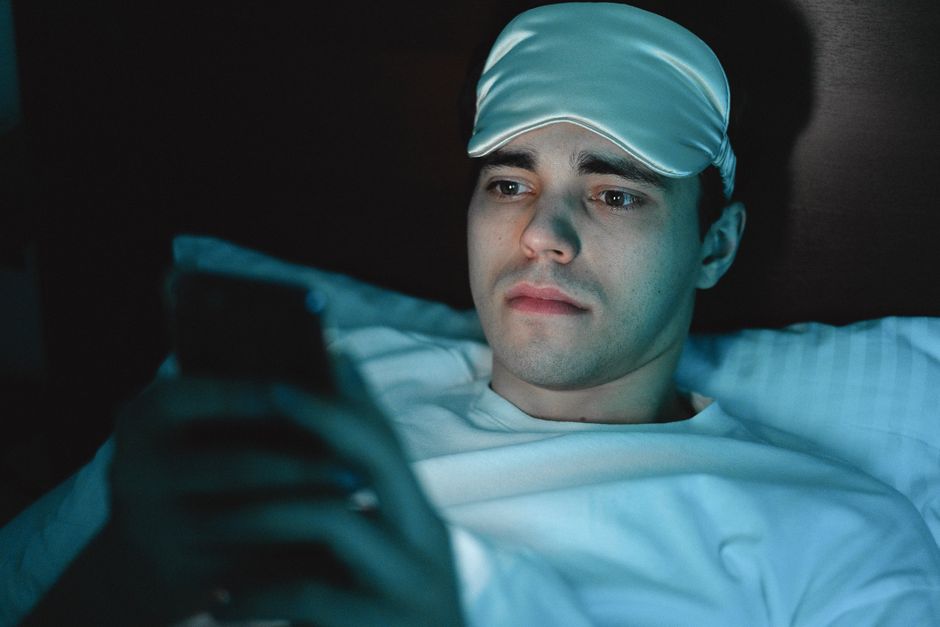
Blue light and screen time disrupt men's sleep by suppressing melatonin, keeping your brain alert, and pushing bedtime later. For men who train hard, work long hours, or want better recovery and focus, controlling evening screen habits is one of the fastest sleep upgrades you can make.
- The critical window is 60–120 minutes before bed, when bright light and stimulating content delay sleep most.
- Blue light is part of the problem, not the whole problem; scrolling, gaming, work stress, and bedtime drift often matter just as much.
- Night mode helps marginally; dimmer room lighting and less screen time work significantly better.
- Poor sleep directly hurts training recovery, mood, appetite control, and next-day focus—making this a performance issue, not just comfort.
- The most practical fix is a low-light, low-stimulation final hour with your phone out of bed.
Why blue light and screen time disrupt men's sleep
Blue light and screen time disruption is not about eye strain. The real issue is that screens keep your brain in daytime mode when your body should be winding down.
Light regulates your circadian rhythm—the internal clock controlling alertness, sleepiness, and sleep timing. Evening exposure to short-wavelength light suppresses or delays melatonin, the hormone that preps your body for sleep.
Research on PubMed consistently shows that evening device light affects sleep onset, alertness, and sleep quality. For practical guidance on how to manage evening light exposure and sleep timing, see this Sleep Foundation guide. But the strongest real-world impact usually comes from the combination of light, mental stimulation, and simply staying awake longer than planned.
That matters for men who train, work long hours, or want better energy and recovery. Late-night screen habits chip away at both sleep quantity and quality, and both show up fast in mood, consistency, and next-day performance.
What blue light actually does before bed
Blue light at night delays sleep by signaling to your brain that it is still daytime. This makes you feel less sleepy, pushes sleep onset later, and shortens total sleep time if your wake time stays fixed.
Not all light exposure is equal. A bright phone at lunch supports alertness. A bright phone at 11:30 p.m. works against the wind-down process you need.
Why the last two hours matter most
The final 1–2 hours before bed is where most sleep disruption happens. If your screen use is bright, close to your face, and paired with work, gaming, or emotionally charged content, the effect is usually stronger.
This is why a simple rule works: protect the final stretch first. You do not need to panic about screens all day. You need discipline late at night.
Why screen content matters as much as light
Your brain reacts to more than light. Email, social feeds, sports clips, news, and games all raise mental arousal. Even with low brightness, the content itself keeps you alert and delays sleep.
That is why screen time and sleep disruption is best understood as a stack: light exposure, stimulation, stress, and bedtime creep all compound.
Why men who train, lead, and work hard should care
Poor sleep shows up in performance fast. If your evenings push bedtime later, the cost lands the next morning in the gym, at work, and in your decision-making.
- Recovery suffers, especially if you already train hard or sleep too little.
- Focus drops, which makes work feel heavier than it should.
- Appetite control gets harder, and cravings feel louder after a short night.
- Mood and patience dip, especially when poor sleep becomes a pattern.
- Routine quality declines, because tired men make sloppier decisions at night and the next day.
Sleep loss also affects hormones and training readiness, but the exact response varies by person. The safer takeaway is simple: better sleep supports better recovery, steadier energy, and better consistency.
The real problem: bedtime drift, not just blue light
For many men, the biggest issue is not one device. It is the pattern: one quick check becomes 45 minutes of scrolling, one episode becomes three, and one late email turns into a full second shift.
That is where screen time and sleep disruption becomes a habit problem as much as a light problem. The screen does not just shine. It keeps you engaged, reactive, and awake longer than you intended.
A better question than "Is blue light bad?" is "What is my nighttime screen routine doing to my sleep window?" That framing is more honest and more useful.
Signs your screen use is hurting sleep
- You feel tired, then get a second wind once you start scrolling
- You take your phone to bed and stay awake longer than planned
- You wake up in the night and check messages or feeds
- You rely on caffeine to recover from late-night screen use
- Your bedtime keeps sliding later on work nights
If that sounds familiar, the fix is not perfection. It is adding friction to the habit so the easy choice becomes the better one.
How to reduce sleep disruption without going off-grid
You do not need a digital purge. You need a repeatable system that lowers evening light, cuts stimulation, and protects a real wind-down window.
1. Set a hard screen cutoff before bed
Start with 30–60 minutes screen-free before sleep. If you can do 90 minutes, even better. The key is consistency. A realistic rule you keep beats a perfect rule you ignore.
2. Dim the room, not just the device
Night mode reduces some short-wavelength light, but does not solve the whole problem. Lower overhead lighting, use warmer lamps, and stop treating a bright room as neutral at night.
3. Keep the phone out of bed
Your bed should reinforce sleep. If your phone turns the bed into a theater, office, and news desk, sleep usually loses. Charge the phone across the room if you need a hard boundary.
4. Get outdoor light early in the day
Morning daylight anchors your circadian rhythm. A short walk outside after waking makes it easier to feel sleepy earlier that night. This is one of the most overlooked fixes for late sleep timing.
5. Replace the habit with a better one
Do not just remove screens and hope discipline carries you. Swap in something easier on the brain: a paperback, light stretching, journaling, prep for tomorrow, or an audio-only wind-down.
6. Clean up the rest of the evening stack
Late caffeine, alcohol, heavy meals, and stressful work all make screen-related sleep disruption worse. If your sleep is off, tighten the whole evening routine before blaming one variable.
A realistic evening routine that works in normal life
The best routine is not the fanciest one. It is the one you can keep on a busy Tuesday. Your goal is to make sleep easier without turning the night into a fragile ritual.
- 90 minutes before bed: finish work, lower the lights, and stop high-stimulation tasks.
- 60 minutes before bed: cut screens or switch to audio only.
- 30 minutes before bed: shower, stretch, read, or prep for the morning.
- At bedtime: keep the room cool, dark, and free of message checks.
If you have kids, shift work, or unpredictable evenings, make the routine smaller rather than skipping it. Even 20 calm minutes in lower light helps your body shift toward sleep.
You also do not need instant perfection. But if screen time and sleep disruption has been part of your routine, a week of better light control and less late-night scrolling is often enough to notice better sleep onset, steadier energy, and a cleaner morning.
FAQ
Can blue light cause sleep issues in men?
Yes. Blue light at night delays melatonin and pushes sleep later. But for most men, the full problem also includes stimulating content, stress, and spending more time awake than planned.
Does night mode fix blue light and screen time sleep disruption?
No. Night mode reduces some blue light but does not fully fix the problem. It does not remove the alerting effect of work, scrolling, gaming, or streaming late at night.
How long before bed should you stop using screens?
A good target is 60 minutes before bed. If that feels unrealistic, start with 30 minutes and build from there. The last hour is usually the highest-value window to protect.
What is more harmful for sleep: blue light or scrolling?
It is usually the combination. Blue light affects timing, while scrolling affects arousal and bedtime drift. Together, they keep you awake longer and make sleep harder to start.
How do you reduce screen time sleep disruption without quitting devices?
Use a simple system: dim the room, reduce screen use in the final hour, keep the phone out of bed, and get morning daylight. That approach is practical and works better than relying on filters alone.
Does melatonin help if blue light disrupts your sleep?
Melatonin can help, but it is not a substitute for better habits. Fixing your evening routine—light, screens, and stimulation—usually works better and builds a sustainable sleep pattern.
The bottom line
Blue light and screen time sleep disruption is real and manageable. The main threat is not your phone by itself. It is the late-night mix of bright light, mental stimulation, and a bedtime that keeps drifting later.
If you want better recovery, steadier energy, and more control over your routine, start with three moves: dim your lights, cut screens 60 minutes before bed, and get outside early the next morning.
Clean up that final hour, and sleep usually gets easier. Once that improves, training, mood, focus, and everyday discipline tend to follow.
ActiveMan — Make Your Move
The Modern Guide to Men’s Health, Fitness & Lifestyle.


