
Dumbbell Bench Press: Form, Muscles & Programming
Master dumbbell bench press form, target muscles, common mistakes, and programming for chest strength. Complete guide with variations.

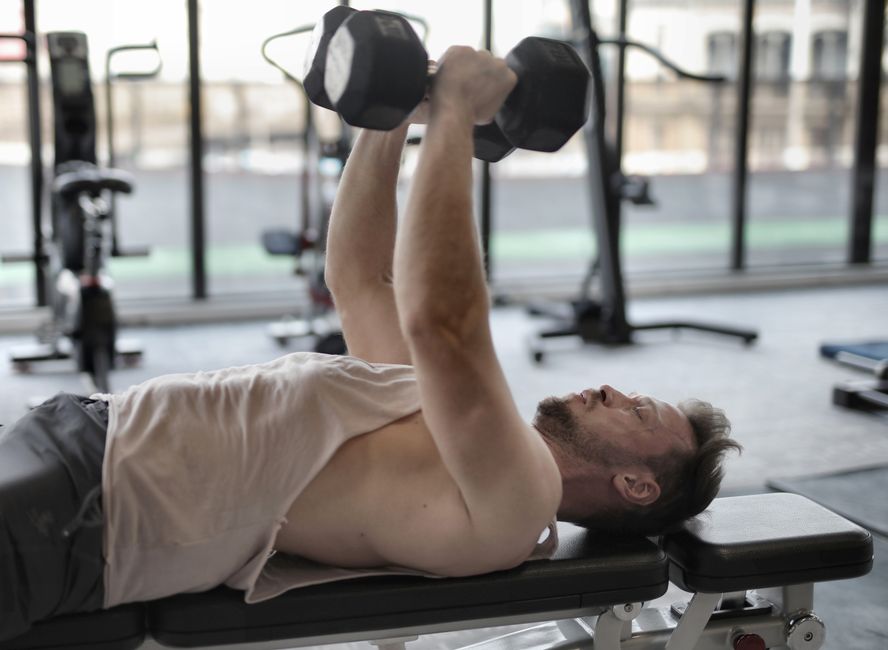
The dumbbell bench press is a fundamental chest-building exercise that develops upper-body pressing strength, muscle size, and left-to-right balance. It works for beginners learning clean pressing mechanics and advanced lifters seeking greater range of motion and stability control than a barbell provides.
If you want a stronger chest and more shoulder-friendly pressing, the dumbbell bench press deserves a regular place in your training program. It targets your pecs, triceps, and front delts while forcing each arm to work independently.
What muscles does the dumbbell bench press work?
The dumbbell bench press primarily targets the pectorals (chest muscles). Your triceps extend the elbows during the press, and your front deltoids assist as the weights move away from your chest. Your upper back works hard to stabilize your shoulders against the bench.
Dumbbells allow each arm to move through its own independent path. This often creates a longer range of motion, stronger chest contraction, and exposes side-to-side strength imbalances that a barbell might hide. That makes the movement valuable for both muscle gain and refined pressing mechanics. Pairing pressing work with unilateral pulls like dumbbell rows helps correct those imbalances.
The exercise has practical carryover too. Stronger pressing muscles support everyday tasks like pushing, rising from the floor, and maintaining upper-body strength with age. For a broad overview of the benefits of strength training, see the Mayo Clinic.
How to perform the dumbbell bench press with proper form
- 1Sit on the end of a flat bench with a dumbbell on each thigh. Lie back and bring the weights to chest level with palms facing forward and feet planted firmly on the floor.
- 2Pull your shoulder blades slightly down and back. Maintain a natural arch in your upper back, brace your core, and stack your wrists directly over your elbows.
- 3Press both dumbbells up over your chest in a smooth arc. Stop just short of locking out completely, keeping the weights under control instead of crashing them together.
- 4Lower the dumbbells with control until your elbows pass slightly below bench level, as long as your shoulders stay comfortable and your wrists remain stacked.
- 5Exhale as you press and inhale as you lower. Keep each rep even from side to side, and stop the set before your shoulder position breaks down.
Common dumbbell bench press mistakes and fixes
Fix: Keep your elbows roughly 30 to 60 degrees from your torso. This angle usually produces a stronger pressing path and keeps more tension on the chest.
Fix: Lower with intent for about two seconds. A controlled eccentric phase usually leads to better reps, stronger chest tension, and cleaner shoulder mechanics.
Fix: Reduce the load and match both sides. Dumbbells expose imbalances quickly. Use that feedback to improve your setup and tempo.
Sets, reps, and programming for dumbbell bench press
Your ideal setup depends on your training goal. The dumbbell bench press builds strength, size, or muscular endurance when your load, reps, and rest periods align with your objective.
4–5 sets × 4–6 reps · 2–3 min rest
3–4 sets × 8–12 reps · 60–90s rest
2–3 sets × 12–20 reps · 45–60s rest
For most men training for a bigger chest and practical upper-body strength, 3 to 4 hard sets of 6 to 12 reps is the sweet spot. Place the lift early in your push or upper-body session when your shoulders and triceps are fresh.
If you train chest twice per week, use one heavier day and one moderate-volume day. Research comparing chest press exercises with different stability demands found similar muscle-damage recovery in resistance-trained men, suggesting that dumbbells fit well into normal training weeks for most lifters.
If you use caffeine before training, it may enhance upper-body resistance workout performance when tolerated well, according to a Journal of Strength and Conditioning Research study on caffeine and upper-body resistance exercise. Keep it simple: test your dose in training, not on a max-effort day.
Dumbbell bench press variations and alternatives
Incline dumbbell bench press
Use this variation when you want more upper-chest and front-delt emphasis. A low incline usually offers the best balance between chest work and shoulder comfort.
Neutral-grip dumbbell bench press
Press with your palms facing each other if straight pressing bothers your shoulders. This setup often feels smoother and works well during high-volume training blocks.
Single-arm dumbbell bench press
This version adds a bigger anti-rotation challenge for your core and exposes side-to-side strength gaps quickly. Use lighter loads and prioritize control.
Barbell bench press
If your main goal is moving the most total load, the barbell bench press is the better choice. It trades some freedom of movement for a fixed path and usually more top-end strength potential.
One useful rule: if you want to improve your dumbbell bench press, keep practicing the dumbbell bench press. Research on exercises with different stability demands supports the principle of task specificity in resistance training.
Dumbbell bench press FAQ
Is the dumbbell bench press better than the barbell bench press?
Neither is universally better. The dumbbell bench press offers more freedom of movement, often greater range of motion, and better side-to-side balance. The barbell version typically allows you to lift more total weight.
How often should I do the dumbbell bench press?
Most lifters perform well with it 1 to 2 times per week. Once per week works if your total pressing volume is already high. Twice per week is often better for building skill and steady progress.
Should the dumbbells touch at the top of the dumbbell bench press?
No. Bring them close if that feels natural, but do not crash them together. Finish with control and keep your shoulders packed into the bench.
What is the best rep range for dumbbell bench press?
For most lifters, 6 to 12 reps is the most practical range. Go lower if strength is the priority and higher if you want more endurance work.
Is the dumbbell bench press safe for beginners?
Yes, if you start light and learn the setup first. Focus on planted feet, stable shoulders, and a controlled lowering phase. If getting the weights into position feels awkward, ask for a spot.
What muscles does the dumbbell bench press target?
The primary target is the chest, especially the pectorals. Your triceps and front delts assist the press, while your upper back helps stabilize the shoulders.
The bottom line: the dumbbell bench press is one of the most effective chest exercises you can perform with simple equipment. It builds size, improves pressing control, and helps eliminate strength imbalances. Lock in your setup, own the lowering phase, and add weight slowly over time.
ActiveMan — Make Your Move
The Modern Guide to Men’s Health, Fitness & Lifestyle.


