
Inner Chest Workout: Best Exercises for Definition

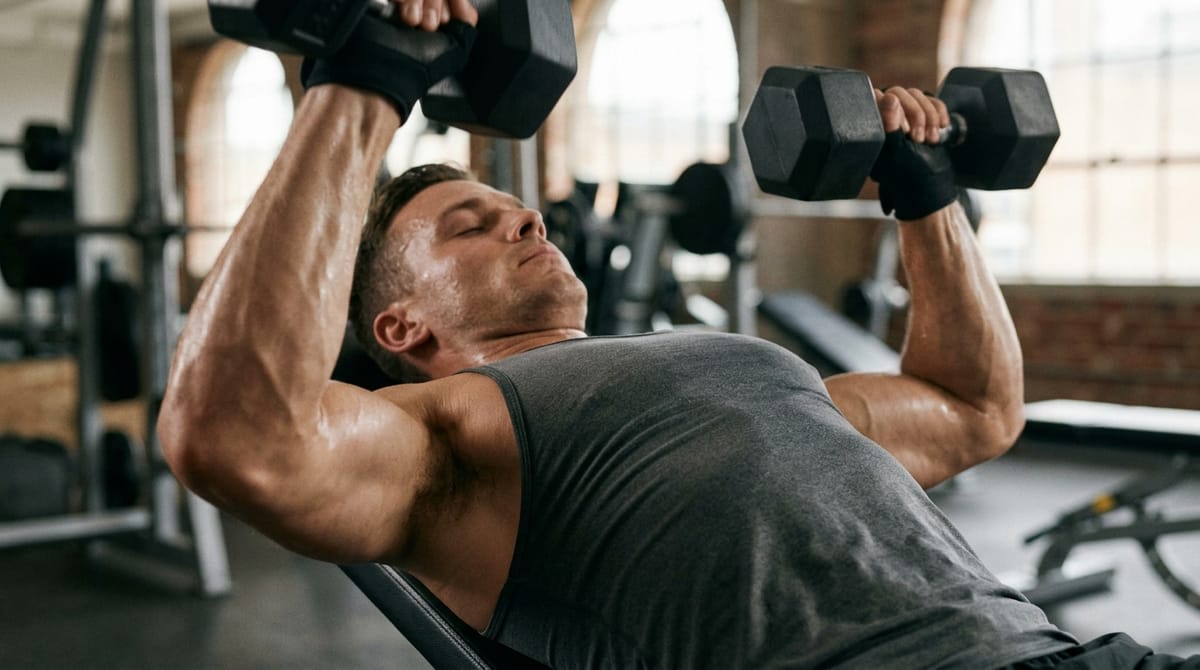
If your chest looks solid from the side but lacks that dense line through the middle, your training likely needs better exercise selection and cleaner execution.
Here's the direct answer: the best inner chest workout combines pressing movements with adduction-based exercises — like cable crossovers and pec deck flyes — that let you create a hard contraction near the sternum. You cannot isolate the inner chest as a separate muscle, but you can bias tension toward the sternal fibers with the right angles, controlled range of motion, and a deliberate squeeze at the finish.
So a focused inner chest workout is not random flyes and burnout sets. It is a structured plan built around mechanical tension, progressive overload, and peak contraction.
Below, you will find the best exercises, a sample program, key form cues, and the mistakes that keep the center of your chest from looking fully developed.
What an Inner Chest Workout Really Means
The phrase inner chest workout refers to training that improves fullness and separation through the center of the chest. There is no separate inner pec muscle — the pectoralis major works as one unit — but certain movements make it easier to create a strong contraction as the pecs shorten toward the midline.
That distinction matters. Moving weight is not the same as loading the chest well. If your front delts and triceps dominate, your pecs get less growth stimulus and the middle of your chest stays flat.
For most men, a well-designed inner chest workout improves:
- Mid-chest thickness and density
- Chest separation and definition
- Mind-muscle connection during pressing
- Overall pec development
The most effective approach pairs heavy compound presses with isolation work that lets you bring the arms inward under tension and squeeze hard at end range.
The Best Exercises for an Inner Chest Workout
A strong inner chest workout uses a mix of presses, fly variations, and cable or machine movements. Cables and machines are especially useful here because they maintain tension on the pecs where dumbbells often lose it near the top of the rep.
1. Cable Crossover
For most lifters, the cable crossover is the signature inner chest workout exercise. Cables provide continuous tension through the full range, and the finish position makes it easier to actively adduct the arms and squeeze the pecs together at the midline.
Use a slight forward lean and keep a soft bend in the elbows. Focus on driving your upper arms inward — not just your hands together. Pause for one second at peak contraction for maximum chest activation.
2. Pec Deck Fly
The pec deck machine is one of the best tools for chest definition and detail work because it removes balance from the equation. That lets you direct full effort toward the pecs instead of stabilizing the weight.
Control the lowering phase, avoid bouncing the stack, and focus on driving the elbows inward through a full range. This is a safe lift to progress consistently over time.
3. Hex Press
The hex press is performed by pressing two dumbbells together throughout a flat bench press movement. That constant inward pressure increases chest tension and creates a strong contraction through the center of the chest.
It works especially well when standard dumbbell presses feel too shoulder-heavy. Use moderate weight and maintain constant pressure between the bells for the entire set.
4. Close-Grip Push-Up
A close-grip push-up will not replace heavy pressing, but it is an effective bodyweight finisher for inner chest training. With hands positioned closer together and a hard squeeze at the top, you can train the chest with zero equipment.
To increase difficulty, slow the lowering phase to three seconds and hold a two-second squeeze at lockout. This simple technique dramatically increases chest stimulus.
5. Low-to-High Cable Fly
This cable variation trains the upper chest while still delivering a strong inward finish. It is a smart addition if your upper and inner chest both need more development.
Draw the handles in an upward arc from hip height to chest height. Do not let the movement turn into a front raise. Keep the motion chest-driven, not shoulder-driven, and squeeze at the top.
6. Plate Press
Simple and underrated. Hold a weight plate between your palms and press it straight out from the chest. The constant inward pressure creates a strong pec contraction, especially near the sternal center.
Use it as a finisher or as a quick activation drill before your main pressing work to improve mind-muscle connection early in the session.
7. Smith Machine Guillotine Press
This advanced option can load the chest hard when performed carefully. Lower the bar toward the upper chest with elbows more flared than on a standard bench press to increase pectoral involvement.
It places more stress on the shoulders, so if your shoulder mobility is limited or you have existing irritation, skip it. Safer options like cables and the pec deck can still build a complete chest.
How to Structure an Inner Chest Workout for Growth
An effective inner chest workout does not need ten exercises. You need a few well-chosen lifts that cover heavy loading, a controlled stretch, and a strong peak contraction. Quality beats volume every time.
Use this routine one or two times per week based on your recovery capacity and overall program structure.
Sample Inner Chest Workout
- Incline Dumbbell Press — 4 sets of 6–8 reps
- Flat Hex Press — 3 sets of 8–10 reps
- Cable Crossover — 3 sets of 12–15 reps
- Pec Deck Fly — 3 sets of 10–12 reps with a 1-second squeeze
- Close-Grip Push-Up — 2 sets to near failure
This structure works because it combines heavy pressing for mechanical tension with isolation work for peak contraction. That combination is what drives chest hypertrophy.
Sets, Reps, and Rest for Chest Training
For most men, an inner chest workout performs best in the 6–15 rep range. Use lower reps for compound presses and moderate to higher reps for flyes, cables, and machine movements.
- Heavy presses: 2–3 minutes rest between sets
- Isolation lifts: 45–90 seconds rest between sets
- Total weekly chest volume: 10–20 hard sets
If your chest is not growing, do not immediately add more exercises. First improve your form and execution, then add volume or load as needed.
Best Training Frequency for Inner Chest
One inner chest workout per week can work if your program already includes chest pressing on other days. If chest development is a weak point, train it twice per week with a different emphasis each session.
Example weekly split:
- Day 1: Heavy presses plus cable crossovers
- Day 2: Machine press, pec deck, and higher-rep squeeze work
This approach gives you more quality volume without accumulating junk fatigue that slows recovery.
Form Cues That Make an Inner Chest Workout More Effective
You can select the right exercises and still miss the target. In most underperforming chest sessions, the problem is execution — not exercise choice.
Keep Your Chest Up and Shoulders Set
Before each rep, pull your shoulders down and back lightly. This creates a stable base and keeps tension on the pecs instead of the front delts, which tend to take over when the shoulders are loose.
Avoid excessive arching unless maximum strength is your goal. For muscle growth and inner chest development, a stable, controlled position works best.
Lead With the Elbows on Fly Movements
On flyes and cable work, many lifters focus only on their hands. That often turns the movement into a shoulder exercise. Instead, think about your elbows moving inward in a hugging arc.
This single cue can immediately improve your inner chest workout results.
Slow Down the Eccentric Phase
Lowering the weight under control increases time under tension and improves technique. A 2–3 second eccentric works especially well on cable flyes, pec deck sets, and dumbbell presses.
Fast, sloppy reps reduce chest stimulus and increase injury risk. Slow down to get more out of every set.
Squeeze Hard at the Finish
The shortened position is where an inner chest workout delivers the effect most lifters are after. On flyes, crossovers, and plate presses, do not rush through the top of the rep.
Pause briefly and contract the pecs hard for one to two seconds. That deliberate squeeze is the detail most men skip — and it makes a real difference in chest development over time.
Common Mistakes That Limit Inner Chest Development
If your chest still lacks thickness through the middle, one of these mistakes is likely holding you back. Identifying the problem is the fastest way to fix it.
Too Much Benching, Not Enough Adduction Work
Flat barbell bench press is a strong mass builder, but it is not enough on its own for complete chest definition. A well-rounded inner chest workout also needs movements where the arms travel inward under load — like crossovers and pec deck flyes.
Using Too Much Weight on Fly Movements
When the load is too heavy, flyes turn into half reps with shoulder compensation. The chest barely works. Use a weight you can control through the full range with a genuine squeeze at the top.
Letting Triceps Dominate Pressing Movements
If every press feels like an arm exercise, check your elbow path and grip width. A grip that is too narrow or elbows tucked too tightly can shift the workload away from the pecs entirely.
Ignoring Progressive Overload
An inner chest workout follows the same growth rules as any other training plan. You still need to increase reps, load, control, or total volume over time. Without progression, the chest has no reason to adapt.
Cleaner execution plus consistent progressive overload is the formula that builds size.
Skipping Recovery
Your chest will not grow if recovery is poor. Prioritize adequate protein intake, quality sleep, and smart volume management. Flat progress often comes from too much junk volume and not enough rest — not from a lack of exercises.
FAQ: Inner Chest Workout
Can you isolate the inner chest?
No. The pectoralis major functions as one muscle group. But an inner chest workout can emphasize movements that increase tension and contraction near the sternal fibers, improving the look of thickness and separation through the center of the chest.
What is the best inner chest workout exercise?
For most lifters, the cable crossover is the top choice. It maintains continuous tension on the pecs and allows a strong squeeze at the midline — two factors that are critical for inner chest development.
How often should I do an inner chest workout?
Train chest one to two times per week. If chest development is lagging, use one heavier pressing day and one lighter day focused on cable and machine work for more quality volume without overtraining.
Do push-ups help with inner chest training?
Yes. Close-grip push-ups and squeeze-style push-ups improve chest activation and work well as a finisher in an inner chest workout. They are especially useful when equipment is limited.
Are cables better than dumbbells for inner chest exercises?
Cables are often more effective for peak contraction because they maintain tension through the full range of motion. Dumbbells remain valuable for building pressing strength and overall chest mass. Use both.
How long does it take to see results from an inner chest workout?
Visible changes depend on training consistency, body fat levels, recovery quality, and genetics. Lifters who train with proper form and progressive overload typically notice meaningful improvement within two to four months of consistent effort.
Build a Better Chest With Smarter Training
A real inner chest workout is not a gimmick. It is a smarter way to train your pecs — with exercises that let you press hard, stretch under control, and squeeze with purpose at the end of every rep.
Focus on cable crossovers, pec deck flyes, hex presses, and disciplined pressing form. Track your reps. Improve your execution each session. Give your chest a clear reason to grow.
If your current chest day is built around heavy benching and nothing else, upgrade it. Add movements that train adduction, clean up your technique, and stay consistent over time. That is how you build a chest that looks complete and developed from every angle.
ActiveMan — Make Your Move
The Modern Guide to Men’s Health, Fitness & Lifestyle.


